
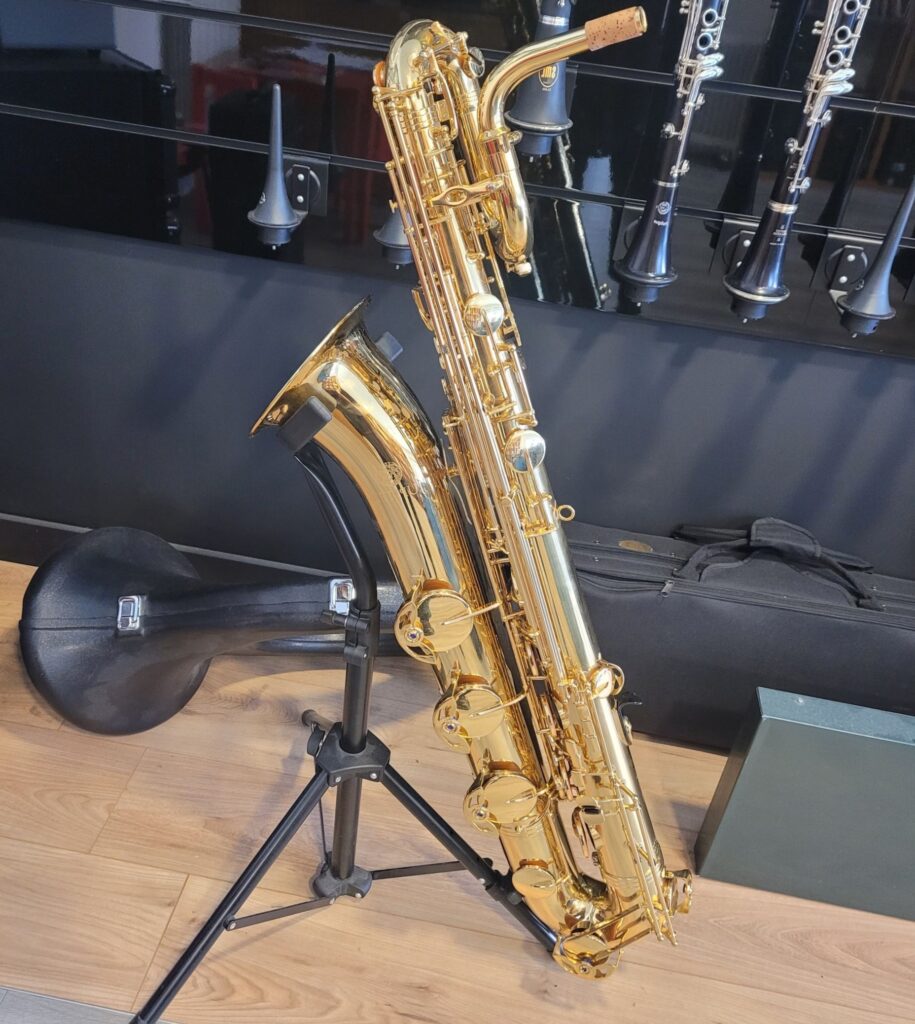
The baritone saxophone is the foundation of the sax section — large and heavy, with a deep, growling low end, essential in the big band. Buying one is a serious decision: you need to settle the range down to low A vs low B♭, factor in weight and a harness, and a bigger budget. This guide sorts it out, with models and indicative UK prices (2026).
Low A vs low B♭ — the key choice
- Low B♭ (down to low B♭) — the historic “short” range. Lighter and more agile (shorter bell), freer sound, easier fast passages. Fine for jazz, pop and solo playing; today mostly found used/vintage and on some budget models.
- Low A (down to low A) — adds a semitone lower (extended bell + extra key). The modern standard in big band and concert-band writing (bass lines). Longer, heavier and a bit pricier.
Recommendation: for big band / section work, choose low A (versatility). On the new UK market most mid/upper baritones are low A; low B♭ shows up mainly on budget/used instruments.
Weight and harness — the practical point
The baritone weighs around 6 kg and can’t be carried comfortably on a neck strap alone. A harness (e.g. Neotech, BG) spreading the weight across shoulders and back is strongly recommended — budget extra (~£30–60), not included. In long rehearsals many players rest it on a peg/stand.
👉 Compare prices and availability at specialist retailers.What else to look for
- E♭ pitch; range low A or low B♭ (above).
- Lacquered brass body; solid, well-set mechanism (lots of big keys).
- Case — given the size/weight, a rigid case with wheels is best; UK warranty/service.
Models available in the UK (indicative prices, 2026)
| Model | Range | Approx. price | Positioning |
|---|---|---|---|
| Gear4music baritone | low B♭ | ~£900–1,200 | budget/beginner (UK own-brand) |
| Jupiter JBS1000 | low A | ~£3,500–4,000 (check) | intermediate/student |
| Yamaha YBS-480 | low A | ~£5,799 | intermediate/pro ⭐ |
Above these sit the professional Yamaha YBS-62 and Selmer. Note: some Yamaha baritones carry retailer export restrictions — check availability.
Entry to pro
The Gear4music baritone (typically low B♭) is the affordable way in. The Jupiter JBS1000 (low A, wheeled case) is a solid step up. The Yamaha YBS-480 (low A) is the reference for serious section players; the YBS-62 sits above it.
👉 Compare prices and availability at specialist retailers.The baritone’s role and sound
More than any other saxophone, the baritone is a team instrument. In a big band it anchors the sax section, doubling bass lines and giving the ensemble its floor; in smaller groups it brings a deep, growling voice that cuts through without ever sounding thin. That role shapes what matters when buying: a reliable low end (hence the low-A preference), a comfortable action across a lot of large keys, and intonation you can trust when you’re the harmonic foundation everyone else tunes to. Character comes second to dependability here — a point the Yamaha YBS-480 makes well.
How much to spend
The baritone is the most expensive of the common saxophones, so budget realistically. Around £900–1,200, a Gear4music own-brand baritone (usually low B♭) is the affordable entry. The Jupiter JBS1000 (low A) steps up to roughly £3,500–4,000, and the low-A Yamaha YBS-480 sits near £5,799 as the reference for serious section players, with the professional YBS-62 above it. Remember to add a harness (~£30–60) and, ideally, a wheeled case — genuine costs on an instrument this size. Because prices and availability vary (and some Yamaha baritones carry export restrictions), always confirm current stock before committing.
Transport, storage and living with the size
The baritone’s dimensions shape ownership as much as its price. A rigid, ideally wheeled case is worth prioritising — carrying an instrument this size and weight any distance is otherwise punishing — and you’ll want somewhere safe to store it upright at home, on a sturdy stand or peg rather than propped in a corner. Think, too, about the spaces you’ll play in: the baritone needs room, and getting it in and out of a car or onto public transport takes planning. None of this should put off a committed section player, but it’s worth picturing the practicalities before you commit to the largest saxophone most people ever own.
FAQ
Low A or low B♭ for big band?
Low A is more practical — it covers bass lines below low B♭ common in modern writing.
How heavy is a baritone saxophone?
Around 6 kg. That’s why a harness beats a plain neck strap.
Is the baritone a good first instrument?
Not really: it’s large, heavy and expensive. Better to start on the alto and add a baritone when you join a section.
For the full family overview, see types of saxophone; for used, the used buying guide.
Specs from manufacturers and specialist retailers; prices indicative (2026) and vary by retailer and version.
🎷 Essential accessories for saxophonists
As an Amazon Associate I earn from qualifying purchases.